The Case for the Dungeon DJ
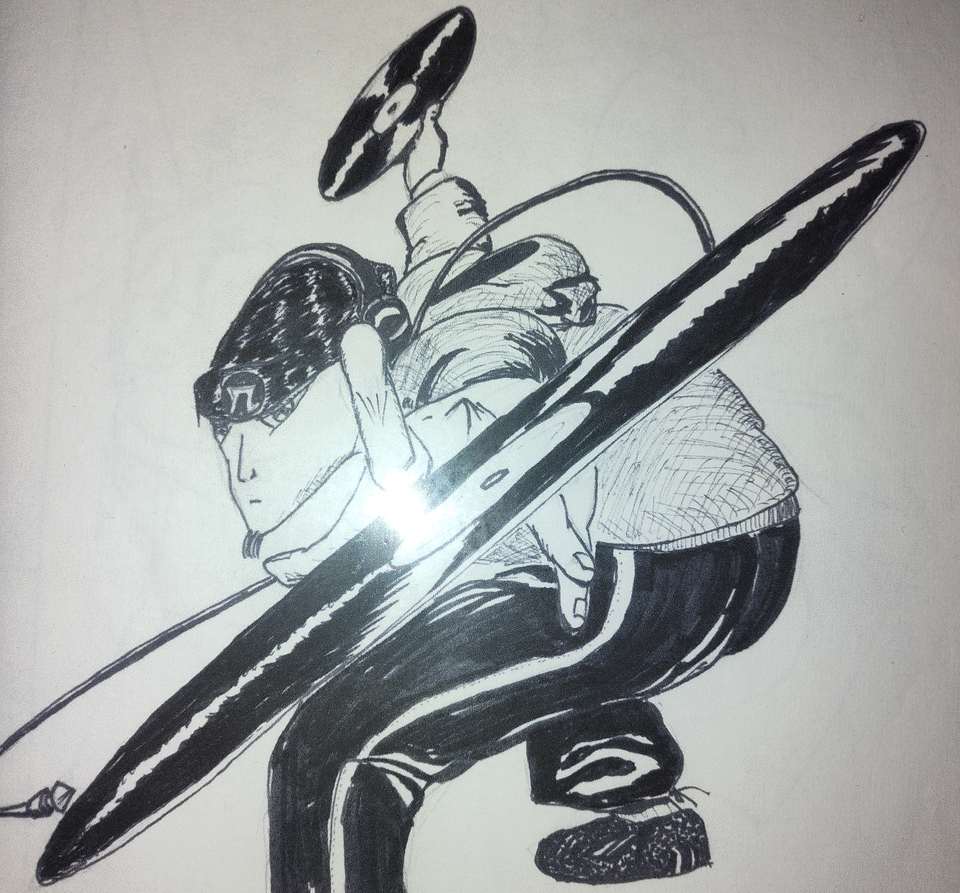
The Case for the Dungeon DJ
A Dungeon DJ can be used in any tabletop RPG, but is designed specifically for the Vergerunner Chronicles Campaign Setting.
Why use a Dungeon DJ?
When it comes to Dungeon Mastering duties, you have enough to handle, with story, encounter design, creating NPC’s, and coming up with Cool Loot. It never ends, and in the end you are the Master of Ceremonies for the event, it’s a lot of pressure.
It’s always good to have a buddy. The Dungeon DJ takes up the duties of background sound and music during play, can help manage DM duties, and also play NPC characters.
The case for the Dungeon DJ and The MC (an alternative name for the Dungeon Master, who is the Master of Ceremonies, and will be used throughout this document), is to blend the storytelling with the soundtrack, the two work together.
The Role of the Dungeon DJ
Zero Rule: Bring the Love This may be a cringe statement. That’s why I’m bringing it first. A game is not a love-fest. It’s not “Everybody Wins” all of the time. There is great pain in story, which gives it meaning. This is often the heavy load carried by the MC, to give enough pain, to spark the meaning, for the players in the story we create. This is why it’s good to have a buddy. The Dungeon DJ in all aspects further revealed, must bring the love into the moment. You must love the world the MC is creating and commit to it. This means you pick your tracks wisely, and consult with your MC before each session for review, and prepare for disagreements. This means having alternatives, options, and wild ideas. The MC is Captain of the Ship at the head, and you are the First Mate, which means you are the heart of the operation. You must bring the love.
Interlude: On MC and DJ pre and post game consultation
In the process of consultation, unless the MC requests guidance specifically, the Dungeon DJ must ask the MC permission to speak your mind and say Your Piece on subjects of story and MC method. The MC must reject this offer on the first ask, to get the Dungeon DJ prepared for rejection. Again, the MC is captain of the ship, they command the vessel. If a second offer is made, and it must be at least a fortnight between the first and the second offer, the MC must acquiesce and let your buddy say Their Piece. As Dungeon DJ, keep it concise and well thought out, and don’t go on for longer than 10 minutes to say Your Piece. Use a timer. Further points will be discussed as the night goes on, and prepare for a long night. Sometimes the discussion will conclude in 5 minutes, that is also just fine. As long as there is clarity. If clarity cannot be achieved, then it may be irreconcilable and you will have to find a different Dungeon DJ, or another MC. It’s always a possibility and it’s important to keep that in perspective.
The First Role: The Tech Always prepare. A Dungeon DJ provides the soundscape for the story, and keeps the volume levels low enough for gameplay to proceed. You can use any number of tools to this effect, but you must bring your own equipment, that’s your responsibility. You do not need a lot of technology. Tools can include, and are not limited to: A laptop, a tablet, a phone, dj software, a soundboard app, a mixer, speakers, the latest Pioneer has to offer, an acoustic instrument (though I would advise against bagpipes). Always prepare.
The Second Role: Ambience The Dungeon DJ is to create the right sound environment for every scene in the story as it is played. Imagine the sound of a lush wind on a brave summer night, the dankish halls of a subterranean tomb reeking of ghosts, a lonely peak over a snow capped crest on a high voyage through the clouds. Think owls hooting or the call of a Daghorn amid the crickets, the thunk of a Millenia Bell billowing dust, an eldritch cry from forty thousand years ago, the thrilling crack of thunder echoing after a blinding bolt. You must know when to drop a groove, and when to make it ugly, terrifying, surprising, delightful, wondrous, and very much awesome.
The Third Role: The Non-Player Characters The Dungeon DJ is a free agent when it comes to NPC decisions, however this should be negotiated with the MC so you don’t step on their nethers (see The Partnership and Using Rumors below). Nobody likes to see an MC talking to themselves, so the DJ takes up some Non-Player Roles in the story, and the MC takes the others. Never introduce more than two NPC’s at a time (one played by the MC, one by the DJ). This is to maximize drama at the table. The MC has a partner with information the Players do not, so use this to bounce clues, create mis-direction, and keep things moving.
The Partnership, or Improv Games for the MC and DJ
Again, the MC is the captain of the ship, you should defer to them in all situations, and this should always be fun.
Volume
The Dungeon DJ must always be aware of the volume level of the mix. It should allow players and the DM to converse at a comfortable level, and that is a lot lower than you think. The one thing you must constantly monitor is that your volume levels are low, just perceptible.
No Dungeon DJ should be scolded for “Volume Creep” as the levels rise gradually when things get exciting. To make this work, every time the MC calls on you to voice an NPC, check your levels and make sure you can speak without effort over the mix. Then leave it there as best you can until the next time you are called on to voice a character, eventually this will become a habit. Check the Levels, and work together.
Improv Scripting
Voicing NPC can potentially screw up the plot points, so it’s good to have a game here. You can pass note cards, or go over “the script” with the MC beforehand. If the Dungeon DJ is playing a character and comes up with a “line” that would lead to a plot kerfuffle, the MC can announce “A New Idea!” And the Dungeon DJ comes up with a new “line” on the spot. The MC can repeat this after each new line until something sticks. Alternatively, the Dungeon DJ can call “line” when they get to a point where they are lost, and the DM can feed them a line, which they must repeat in character. It will look ridiculous, but that’s part of the fun.
Feel free to come up with some other games for the DJ, the MC, and even the Players to riff on, like “Scenes from a Hat” or “Director”!
Using Rumors
The most common NPC a Dungeon DJ will play is the Guy at the Bar, who has rumors. The MC can give the Dungeon DJ three to four rumors on notecards: the juicy news, the hottest gossip, the ill portends, the deep pockets. You engage with players and decide which rumor the NPC is going to drop. These categories are known only to you and the MC.
The Juicy News is something that is going around town, everybody knows it but they still treat it like a secret. However there may be something else that most folks don't know about. A prune may collect this subtle information.
The Hottest Gossip is privileged information known only to a particular part of the community, such as a guild, temple, or syndicate. It is often a task in desperate need of doing, and general knowledge of the problem would cause great embarrassment to said community, and may involve a reward in prunes.
The Ill Portends is bad news for everybody, and only a few people know about it. Panic could spread if this rumor gets out of control, and some people will kill to keep it a secret. It may involve the Otherworldly spirits and the trading of curses and boons. Your prunes are no good here.
The Deep Pockets is a big score, known only to a select few, and you may have to put up your prunes just to get the information, then go to a secret location, give a secret handshake, before said rumor will be found. It often involves a secret place that has been discovered, or an opportunity for a grandiose theft requiring a strategic plan. The reward will be epic, but the task will be most dangerous.
Tools of A Dungeon DJ
Sound System (it doesn’t have to be fancy) or a musical instrument you can play quietly and with feeling.
A Notebook for taking game related notes
Your own Set of Dice
Bag of Hats and Wigs (optional)
An assortment of Cough Drops and Mints, unused and wrapped, to be shared, when the need arises.
What types of music should a Dungeon DJ Play?
The first order of business to address is that: actual music should be used sparingly. What you should stock up on is Ambience. The Ambience sets the scene, and you should have a set of sounds for each scene ready to go. That means background sounds based on location, weather, mood, scenic cues, and one-shots.
Location refers to where the scene takes place. Is it a busy market or tavern? A dripping cavern? A windswept steppe? A wave crested beach? A bucolic glade?
Weather refers to the sounds that change within a scene. Usually this involves wind and rain, distant thunder, blizzards, whirlwinds. Consult with the MC if this can get louder than comfortable to emphasize the difficulty of characters being able to hear each other.
Mood is an additional layer to add suspense or tension. It could be a low drone, scratches and whispers, bell tones, chimes, sizzling cymbals, a gong at certain intervals.
Scenic Cues are things that place certain audible objects in the scene. The most common is a crackling fire, or it can be the hum of a machine, the squeak of a rocking chair, or tapping of mining tools.
One-Shots are to indicate some kind of shift in the scene, similar to Scenic Cues, but only played once or twice to indicate that something is happening. This could be the sound of approaching hooves, the grunt and growl from something in the shadows, the cackle of creatures hiding in ambush, or the sudden roar of an angry beast!
All of these sounds put together will create a more vivid backdrop for the MC and Players to act in. There will be future posts on where to find and how to make such sound effects yourself. But for a quick start I highly recommend https://tabletopy.com/
The Significance of Beats in the course of Time
All the sounds we have discussed are Ambience as opposed to Music. Ambience will allow the players to go about their business without getting in the way. But Music will have an important part to play in certain situations. Music comes in two varieties: Instrumental and Lyric. We will start with Instrumental Music
Time and Tone are the defining features of music, which draws attention to itself. The Beat of music will create a rhythm that imposes itself on the scene, and that can be effective in certain situations, particularly when time is of the essence. This can come either from the Players or the MC.
Instrumental Music is used in two particular situations. When the MC declares a “Time for Action!” (this can mean Duration is compressed in a scene) that means you need to Drop a Beat that fits the mood. What this does is it means the Players have a certain amount of time to complete a task in the story, which is measured by the duration of the Instrumental song. This will add tension to the action in the scene.
Alternatively, the Players can announce that they have “A Cunning Plan!”, which they will relay to their fellow players before the Action takes place. This means they will coordinate their actions to achieve a certain goal. Once the Cunning Plan is agreed upon, and the players declare “GO!”, it’s time to Drop the Beat! They will only have so much time to have the plan come together, or for it to unravel spectacularly, or somewhere in between. The Beat will keep the tension up.
Lyrical Music is used only for Spell Actions. Each song is a spell which grants a number of advantages to the Players, allowing them to do miraculous things as the song is played, and are unleashed during different parts of the song: The Intro, the Verses, the Chorus, the Bridge or Breakdown, and the Outro. The song is to be played all the way through, and only if the spell caster is able to extend the Bridge or Breakdown, do they get extra time. This means you will have to drop the Bridge or Breakdown on the One for an additional round of action, and you should practice this so you don’t disturb the groove. A Spell Caster will be listening to the song to interject action changes when the song transitions between states. This will get wild.
Never Diminish, Always Rescue
Background Ambience is your primary state, music should only be brought in at key moments to add to the scene. Be aware that anything with rhythm will draw attention to itself, so if the scene needs a little push, drop in something with a beat. If there is an emotional moment, be careful when choosing something, or alternatively, drop all extraneous sound out. You should always be building and releasing tension. Never diminish a moment by bringing in something ironic, even if you think it is funny, because your players will suffer if they are played as a joke.
There is one time when you can use music ironically, and that is when a scene is falling apart, it’s not making sense, and both the players and the DM are struggling. The MC can call “Music!” and drop in something as playful as possible, totally at odds with the situation. This can provide release from something that isn’t working, and transition to a new mode with a change of tune.
Take Requests, Reward Awesomeness!
The MC should be in on this game. If a player thinks a particular song would be great for a scene, help them look it up and play the damn song! Give XP or Hero Points for a great request. This can be a “Cunning Plan” scenario or just background. Be ready to turn the beat around or bring in another equally awesome tune when the song is over. Find instrumental versions of favorite songs, or ones that are in a different genre (Bardcore is all over the YouTubes!)
A List of Must Have Songs (use wisely)
Yakety Sax by Boots Randolph
Love's Theme by The Love Unlimited Orchestra
Spanish Flea by Herb Alpert and the Tiahuana Brass
Frolic by Luciano Michelini
Pink Panther Theme by Henry Mancini
Green Onions by Booker T. & the M.G.’s
Jazzopédie by Satie
Window Gazing by Ivor Slaney
The Good, the Bad, and the Ugly Theme by Ennio Morricone
Carmina Burana by Carl Orff
Adagio for Strings by Samuel Barber
Tubular Bells by Mike Oldfield
Coffin Nails by MF Doom
The William Tell Overture by Rossini
Here Comes the Money by Naughty by Nature
Highly Recommended!
Koyaanisqatsi by Philip Glass
Akira Soundtrack by Geinoh Yamashirogumi
Voice of the Soul by Death
Call of Ktulu by Metallica
Equinoxe by Jean Michel Jarre
Golliwog’s Cakewalk by Debussey
Barber of Seville Overture by Rossini
Found on Bandcamp
Cryo Chamber Label (also Cryo Crypt)
Found on YouTube
Bardcore!
More Resources: Internet Archive, Tracklib, Soundcloud,
NPC Personality Roller (might be useful to roll them up with the MC before the game)
Roll a d20 for both, or roll a d12 and add 1 for each additional roll, up to +8.