The Game of Prunes
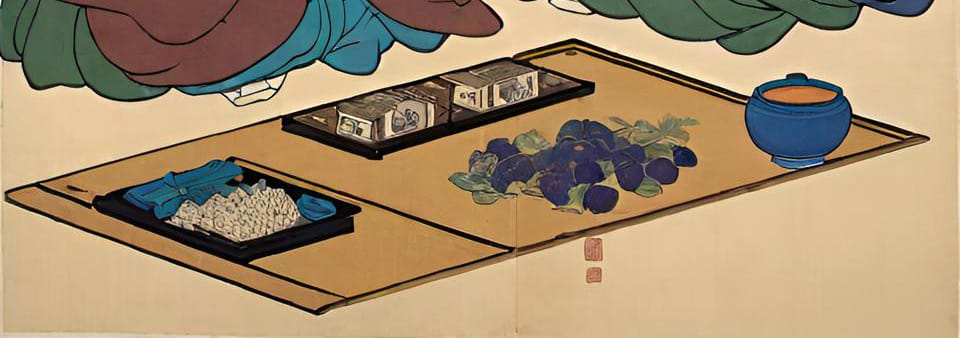
“More prunes, more problems” - The Big E
The Basic Component of the Game of Prunes is a single Prune Tree. A single Prune Tree will give one 100 prunes a year, to be used as one wishes. This prune crop will last one year before it Molders, so you need to use all your prunes by the end of the year. Each Prune Tree adds their value of 100 to the land. This is how the price of land is measured, how many prune trees are currently growing on that land.
The Kingdom takes 10 percent of your prunes each year. On better years it can drop to 4 percent, on more trying years (war, plague, famine) it can go up to 20 percent. Royals determine their value by how many Prune Trees are grown in their kingdom, and the taxes they have to be used each year. However, prunes not used will molder, so they must be used each year to fund certain projects, which can increase the ability of prunes to be grown in their kingdom, or they can exchange it for the spoils of war: Gold.
Gold is difficult to get, and the trade is controlled by the Church of Ademos, but it will last indefinitely. Gold received by the kingdom from conquest or expidition is taxed by the Church of Ademos at 10 percent of what plunder is taken that year, and at 1 percent every year after. The Kings have no choice in the matter, because all gold must be kept in a Church Approved Banking House (locally called a Caboose). Stashing Gold outside of a Church Approved Banking House is illegal and is the primary business of the Inquisition other then ferreting out heresy.
Kings will use their gold in buying alliances with other kingdoms, waging war and conquest of other Kingdoms to obtain their gold, or seeking out new sources of wealth Abroad or in the Deep. This is why kings are as eager to make alliances with Dwarves and Elves, or go to war with them.
If you are the owner of a piece of land with one prune tree, you are not in the Game of Prunes. You are most likely a landed citizen of the Kingdom, with a common trade which takes up most of your time.
A Knight with a piece of land with 40-50 prune trees is the bottom level of entry to get a Royal Title from the local Lord you fought the last battle under. This is where players can start when using the Royalty Roller on character creation.
Dwarves get caught up in the Game of Prunes by selling gemstones and gold in exchange for prunes and other goods they cannot get, like Prune Beer (sweeter than Shroom Beer), Port Wine (Headier than Vodka), and Bread (Dwarves don’t grow grains, they farm Mushrooms, Potatoes and Cavern Swine). Dwarven society then must dedicate 10 percent of their Kingdom’s activities per year to getting Gold, Silver, and Gems, and Nohmish Crystal Hearts to trade for prunes and other goods, usually managed by a Church Approved Banking House.
Elves get caught up in the Game of Prunes when their kingdom wants to buy weapons of war, which they need prunes to obtain. They do this by exchanging the produce of their Kingdoms, fruits, crystals, and weapons and armor made of Dwarven Bones.
Becoming a Lord, usually by conquest, gets you lands for prune cultivation, and stores of Gold your enemy has stashed away. Further conquests will see your rank increase. Eventually you may sit on the Senate in Zarzundra, who elect an Impirator who sits on the Porcelain Throne. The Emperor reigns for life and determines the laws of the Land, and can name bishops to the Council of Bishops in the Citadel of Ademos. The Council determines what the Tithe will be in gold for each year.
Some families will try to increase the value of their prune crop by applying a process of preservation of their prunes, so that they keep for 2 years instead of 1. The various means of keeping prunes are the following:
- Salted
- Smoked
- Dried
- Pickled
- Candied
- Jammed
- Distilled
- Bricked
- Canned
- Brined and Barreled
Each method will raise the number of years by 1, but incur an additional expense for materials, which can be traded in prunes or in gold.
Frequently Asked Questions
So if anyone can grow a prune tree, why bother? In order to grow a prune tree on your property, you must obtain a License from the local Magistrate, which dictates how many prune trees can be grown on your property, based on social standing and amount of land owned. Each city state has their own rules which are enforced by the local sheriff. If the sheriff finds you growing more prune trees on your property than legally allotted, the sheriff has the authority to cut down the surplus prune trees, and confiscate all prunes that would be grown on that tree, and put you in the stocks for the night. If the prunes are not in season, you had better have some preserved prunes to pay the fine, or you are going to the hoosegow until the debt is paid off.
Each prune tree is taxed a certain percentage of prunes grown. Paying this tax does not require paying in the prunes you’ve grown, rather you can trade other goods for prunes or prune preserves which can be used to pay the tax. So trading with prunes serves as a useful medium of exchange for all parties.
Folks who have no land to cultivate a prune tree must work for their prunes. A single prune will get you a loaf of bread, a pint of ale, a blessing from the Church, or a night in a flop house. (Flop houses are not brothels, they are usually in the basement of an inn, or in some cases, a sectioned off part of a warehouse, where a prune will get you a night flopped over a rope for a sore nights rest).
The benefit of prunes as a trading commodity is that if all else fails, you can eat your prunes and sleep under the stars with a belly full and 40% of your daily recommended fiber.
Why do Kings need prunes? Well they can be used for tithes to the church, in lew of gold, which the monks turn into Port Wine, Prune Beer, and other sundries. They can be traded for gold held in Church approved Banking Houses. Prunes build castles and fortifications, dams, aqueducts, maintain roads and bridges, finance Sky Ships and Caravans, train armies and fund wars, as the infantry will need prunes regularly to keep the fight up. Prunes are used to maintain Royal Households, Dowries, Bribes, Assassinations, and buying Alliances. Prune stores are a sign of wealth as much as fine clothing and well kept estates. Gold is preferred for long term investment in stocks, bonds, and high stakes poker tournaments.
Why not just use gold coins? Two reasons, gold scarcity and the Church. The use of gold is highly regulated by the Church, primarily because of its scarcity, but also because gold is used frequently by the Nohmish in their Alchemy, which makes travel by Sky Ship possible. Gold is the primary conductor of Crystal Energies used in Sky Ships.
This doesn’t mean that people don’t trade in gold, it is done all the time, just not out in the open, lest the Inquisition find you and burn you at the stake for heresy. Gold coins found in dungeons and the like are holdovers from ancient civilizations, often it carries curses, and are used to operate Bepis Machines (usually with a ¼ sized gold piece, or a Quarter) for that sweet bubbly nectar.
The other group that uses and harvests gold are the Druids, who dig up ancient technology and bash together all sorts of infernal machines for their dark arts. The Church is constantly trying to quash the Druid menace, but the old buggers seem to always be one step ahead, since they have discovered 4-wheel drive.
So generally prunes have become accepted as the medium of exchange that can be both spent or eaten, depending on the circumstances.
Skimming prunes is a constant problem, so when someone pays you with a sack of prunes, it be wise to check the contents. Nothing is more frustrating than getting half your pay in figs.
Exchange Rates:
A bag or can of prunes (10 prunes) will get you nicer accommodations at an Inn or Lodging House for 1 night. Canned prunes are often used as payment for day laborers.
A bottle or Jug of prunes (25 prunes) will pay a week's rent at a flat, or a fine meal at a restaurant.
A Jar or sack of prunes (80 prunes) will pay a month's rent, or one night at the finest Hotel.
A Keg of Prunes (160 prunes) can be a down payment on a Flat provided you can make regular payments until the property is bought.
A Barrel of Prunes (500 prunes) can get you a small plot of land (½ acre) in the country, or a tiny house in the city (d4 rooms).
A Port Barrel of Prunes are used in Trade (2000 prunes) and not commonly kept around the house unless you are saving up for the year. This is commonly the amount of tax a Knight would pay on their property per year (20 prune trees).
A note on Gemstones.
Gems are as common as gold (as in, not very), and are also used in Alchemy, however they are not as regulated as Gold. However, the price of a gemstone is more difficult to nail down, as the price you’ll get is how much the buyer is willing to pay. Also there are many different types of gemstones of different value (usually counted in prunes). On top of that, sometimes what is seen as a gemstone is in fact, a Crystal Fragment which will command a much higher price if the seller and buyer are certain that it is a Crystal Fragment. So trade in gemstones is rife with shenanigans, and not reliable as a common means of trade. But you will find plenty of Inns that will allow you to cover your debts in a handful of quality gemstones.